More often than not, in the late afternoon when the sun has started its descent westward but is still high in the sky, you can find me and my husband sitting on a bench, watching the ocean and the beachgoers, in that order. In Cannon Beach, where we live, many of the town’s forty-four beach access points have a bench where a street dead-ends into Oregon’s public coast.
I am drawn to the ocean by more than just the peace it brings to my heart and mind. I’m also fascinated by the way it functions: how this massive body of water has been in constant motion for billions of years. It’s nature’s hamster wheel of energy, repeating its actions over and over. It’s a source of calm and entertainment for those who observe it and a resource for all that engage with it: surfers, fishers, and transpacific shippers, never mind the many life-forms that exist and procreate within it.
Cannon Beach has a population of around 1,600 residents, including part-time homeowners. That number blooms to between ten and fifteen thousand during the peak tourist season, when crowds flock to annual events like the Sandcastle Contest weekend and the spring and winter arts festivals. Even SOLVE’s beach cleanups can bring in more than six thousand visiting participants.
At those times, I always feel an influx of energy traveling through the atmosphere, whether I’m downtown or in my house. I feel the shift as we locals go from moving through our daily routines to a more heightened level of awareness, adopting the alert mindset of a host. In the days right before high season begins, I feel how potential energy fills each of us up, drawing from our off-season reserves.
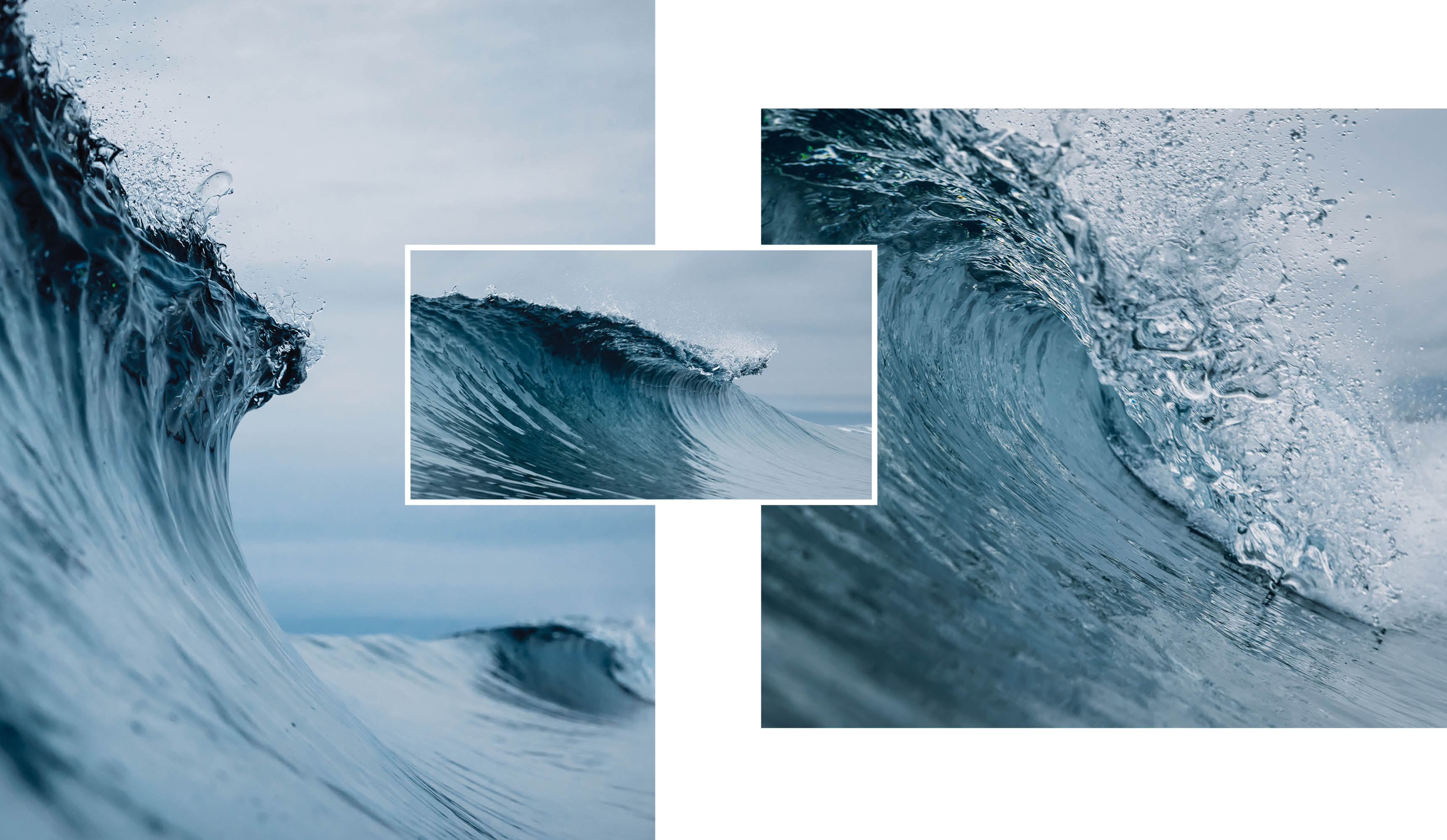
Potential energy is the initial gathering and containment of energy. It’s the wave rising up in the ocean. As that wave crests, the potential energy transforms into kinetic energy, a release that expends energy downward. Energy continually shifts between those two forms, at different rates of speed, volleying back and forth.
When a wave takes shape, the energy within it will exist forever, changing form as it transfers from sea to shore. Yet energy, once created, never goes away. When a wave crashes down onto the beach, its energy disperses, becoming vibrations that we can feel in the sand—little microseisms—and reverberations of sound waves we hear in the air.
Energy exists, all the time, around each of us and around everything. It is always present, in some form or another. It can be elusive, it can be overwhelming; it can generate motion within us, and around us, and sometimes directly through us. Energy may ripple and vibrate outward, but it never goes away, and its effect is permanent.
In 2020, the Oregon Department of Geology and Mineral Industries conducted an earthquake and tsunami impact analysis for coastal Clatsop County, which found that Cannon Beach can swell by approximately 700 to 940 percent at peak visitor season, and that, in the event of a major earthquake and subsequent tsunami, the community could expect to attend to “many hundreds to potentially thousands of displaced people requiring short-term shelter and care.” This report led the city to create and fund an Emergency Manager position. For the past year, that position has been held by Andrew Murray, a National Guardsman and former Clatsop County sheriff’s deputy.
To be successful in a reactive profession like emergency services, Murray must focus on preparedness. His job is to anticipate any sort of emergency situation that could arise for a city with our particular characteristics, from a hiker lost off-trail to a tsunami during peak tourism season. He determines what kinds of preparedness training are needed so that city staff and volunteers can respond appropriately to different events, for any amount of people affected. Then he designs procedures and manages the training needed to efficiently carry them out.
The Cannon Beach Rural Fire Protection District has ten full-time firefighters and up to thirty volunteer part-time firefighters whose responsibilities extend far beyond the city limits: south to the hamlets of Arch Cape and Falcon Cove and east to milepost 30 on Highway 26. They also provide support for Seaside Fire and Rescue and points farther north.
According to the district’s 2025–26 proposed budget, the number of incident responses has more than doubled over the past ten years. More than half of those were rescue and EMS calls. The city has just six full-time police officers and, during the peak season, up to fifteen lifeguards who keep an eye on and communicate with the massive influx of visitors during all types of coastal weather. It’s just not enough personnel to be prepared for any type of emergency at any time, so Murray coordinates volunteer training sessions on most weekends.
Whether it’s volunteers from the Community Emergency Response Team being trained to carry out a search for a missing person, or volunteers from the Cannon Beach Medical Reserve Corps being trained for any and all public health emergencies, our volunteer emergency responders essentially gather volumes of potential energy, then retain it until an emergency requires all that knowledge to be expended in the form of kinetic energy for the benefit of those in immediate need.
As a coastal community that expands and contracts with the seasons, we must learn how to experience the transfer of energy in the same way the ocean does. Those of us on the receiving end of an emergency service, especially when it’s provided by a trained volunteer, are the small swells in the ocean and along its sandy ocean floor.
As the recipients of that kinetic energy, we have the opportunity to do more than merely consume what has been gifted to us, thereby depleting the source. Rather, the energy that has been transferred should be returned to the community when the recipient is able, in whatever form they can best contribute. It could take the form of dollars, but money isn’t what motivates individuals to gather this particular flavor of emergency service potential energy.
Volunteerism, the offering of time and skills in support of others with no expectation of compensation, is self-generated potential energy. So that this energy doesn’t dissipate, Murray supports volunteers’ motivation with quarterly recognition awards and group potluck socials. By far, though, the greatest motivator is a belief in community. One volunteer told me, “I want to act with the behavior I would like to see in the people around me.”
There is beauty in being able to give energy to others, and there is beauty in receiving it as well. This reciprocal motion is regenerative. It’s about caring for and protecting each other, human to human, for the sustainment of our beach communities on the North Coast, and for the benefit of both locals and visitors. All of us together, receiving the kinetic when it’s needed and giving the potential when it’s available, mirroring the life cycle of an ocean wave.
Comments
3 comments have been posted.
Beautiful and smart. Thank you, Kate, for giving me hope, especially during these times!
Martha Koenig | January 2026 |
Ah I love an insightful read on energy, parallels, and reciprocity.. And your charm shines through in the words and stories you choose to share.
Alex Dean | January 2026 |
Bravo Kate. This moving relatable metaphor of community and ocean is thoughtful and spot on. Joy to read it!
Theresa Trelstad | January 2026 | Portland
Add a Comment