With the 250th anniversary of the Declaration of Independence just days away, we talk with two people who have been leading conversations about that anniversary in communities across Oregon. Wendy Willis runs Oregon's Kitchen Table and writes poetry and essays, including several pieces in Oregon Humanities magazine, and moved to Portland after growing up in Springfield. Nick Nash is from Pendleton and teaches philosophy and writing at Blue Mountain Community College.
Show Notes
About our guests
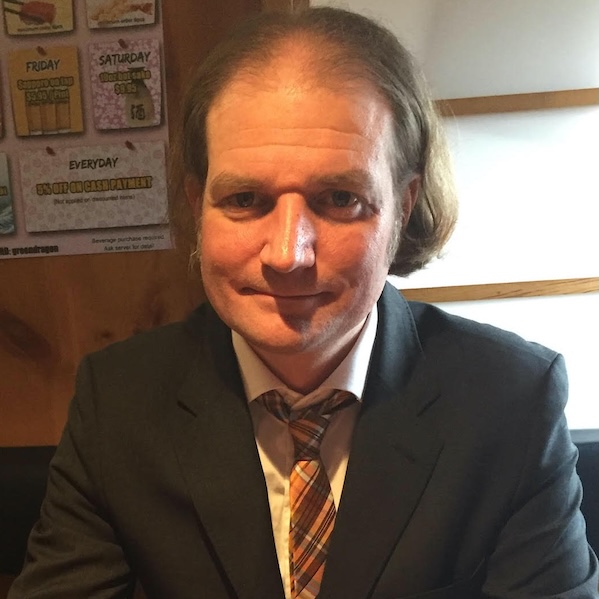 Nick Nash was born and raised in Pendleton. He moved back to the area in 2018 after about fifteen years away. Nick is a philosophy and writing instructor at Blue Mountain Community College. He also owns a small consulting company called Eastern Oregon Business Source that helps local organizations with fundraising and professional development.
Outside of work, Nick is a board member for the Umatilla County Special Library District and a Conversation Leader for the Oregon Humanities Conversation Project. Nick also tries to spend as much time as possible outside of cell-phone range in Eastern Oregon’s Blue Mountains.
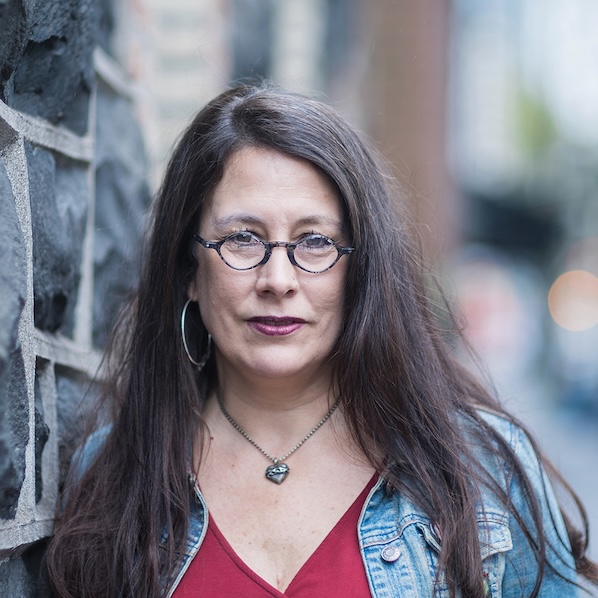 Wendy Willis is the founding director of Oregon's Kitchen Table, a statewide community engagement program housed at Portland State University. She is also a poet, an essayist, a stitcher, and a self-proclaimed democracy geek. Wendy was raised in Springfield, but now lives with her family in Portland.
Further Detours
Wendy and Nick's conversations are two of sixteen programs Oregon Humanities is offering related to the Declaration of Independence throughout 2026. Learn more about Beyond 250 conversations and how to bring a program to your community.
We also presented several Consider This events in 2025 and 2026 on themes relating to the Declaration. You can find recordings of all those programs here.
Wendy Willis has written several essays for Oregon Humanities magazine.
- From Hedge to Hedge: In favor of a democracy for what is (Summer 2024)
- Unbuttoned into the Blow: In defense of human fragility (Winter 2016)
- The Rim of the Wound: An open letter to the students of Columbia University Multicultural Affairs Advisory Board, with a special note to my daughters (Summer 2015)
- Boxed In: Which race to check, which people to leave behind (Winter 2014)
- Wendy was also featured in the video "Mothers to Daughters: On living bravely in an unsafe world"
Transcript
Adam Davis: Welcome to The Detour, a podcast from Oregon Humanities that is just one part of what Oregon Humanities does to get people thinking and talking together. I'm Adam Davis. This episode, published just a few days before July 4th, 2026, brings The Detour together with another part of our work, The Conversation Project.
While The Detour usually involves just a couple or a few voices, The Conversation Project is an ongoing, rotating set of community discussions that happen all over the state, from Brookings to Astoria to Burns to La Grande. Every year, thousands of Oregonians show up to talk with one another at public libraries, nonprofits, municipal agencies, Grange halls, and other gathering places.
These Conversation Project discussions are led by Oregonians who have open-ended, provocative, inviting questions on their minds and want to get people talking in public. This year, the 250th anniversary of the Declaration of Independence, our Conversation Project topics are part of an initiative called Beyond 250 that gets Oregonians together to talk about questions like, "Who are we, the people?
What does freedom depend on? Are we created equal? And what does it mean to be American?" You can find out where these are happening near you and join the conversations by checking our website, oregonhumanities.org, and you can also apply to bring some of these conversations to your community there. For this July episode of The Detour, we invited two longtime Oregon Humanities facilitators who also happen to be leading Beyond 250 conversations to talk about their experiences and hopes with Beyond 250 and this work more generally, and to reflect on what the 250th means or doesn't mean for them and the Oregonians they gather with.
Wendy Willis runs Oregon's Kitchen Table and writes poetry and essays, including several pieces in Oregon Humanities Magazine, and moved to Portland after growing up in Springfield. Nick Nash is from Pendleton and teaches philosophy and writing at Blue Mountain Community College. Wendy's Beyond 250 conversation project is called To What Do We Pledge?
Nick's is Investigating the Consent of the Governed. Here's Nick starting us off with why he's involved with Beyond 250.
Nick Nash: I just love to get people talking, and I think maybe now more than ever, these are really important ideas that we should be thinking about and talking about. And honestly, I mean, for myself, you know, we were sort of just joking back and forth that I only knew it was the 250th anniversary because of Oregon Humanities work.
I'll be honest, I hadn't even read “The Declaration of Independence” in many, many years, right? And so, but when I went back to it, you know, I was struck by how important it seemed to me that the ideas that are captured there are. And so to have the opportunity to go different places in the state and talk about those ideas was something I just couldn't turn down.
Adam Davis: And you said now more than ever. What do you mean?
Nick Nash: Well, I suspect we'll get more into this, but you might think if you have not looked at “The Declaration of Independence” in a long time or ever, that it's just this old crusty document that isn't of much use to today. And I guess, again, just looking at it, that isn't my experience.
I feel like it really captures ideas that are really important for us to be talking about in what feels, to me, like a time of, like, great upheaval, you know, in our country.
Adam Davis: So- Okay. So the “now more than ever” was in some ways a reference to a time of upheaval?
Nick Nash: Yes. Yeah.
Adam Davis: What do you think? Why engage in this weird activity on this weird anniversary?
Wendy Willis: I try not to say no to Oregon Humanities, for one thing. So I try to lead with yes. And I think in this particular instance, I really like the framing, that it's sort of beyond 250, so that it's not entirely backward looking. And I find myself, you know, for many good reasons, you know, in a frame of critique around founding documents and all of that, and I thought, well, this is an opportunity to put that into practice around some really collective ideas about like, okay, so we have a lot of justifiable critiques of the founding of this country, but what's the next sentence?
Adam Davis: So can we go there a little bit into the ideas that you're both sort of pointing to, but what's the angle that you're trying to get people thinking about?
Wendy Willis: So, I mean, sort of like Nick, I reread The Declaration, and I was just really struck by the end. There's all this high rhetoric about separation from England, but then at the end, there's this pledge of mutual support among the signatories, and I just found that really interesting.
I mean, it's a mutual pledge to each other, “our lives, our fortune, and our sacred honor,” and that's a big promise. And I love that. And so I was like, is there anything that we do promise each other? What should we promise to each other? What would be impossible to promise to each other? So I just was sort of interested in exploring that end of The Declaration.
Adam Davis: That after talking about separation-
Wendy Willis: Yeah ...
Adam Davis: really it's like grievance after grievance and then an incredibly ambitious mutual pledge.
Wendy Willis: And kind of warm, right? It's a kind of sharp-tongued document, but then there's this sort of warmth, like in the end we're in this together, so here we go. I find that to be not the feeling I had about it before.
So I was interested in exploring that with others.
Nick Nash: Yeah. I see why we were paired together... because I start at the very beginning, right? And I think we all know the first sentence, right? "We hold these truths to be self-evident, that all men are created equal, that they're endowed by their Creator with certain unalienable rights, that among these are Life, Liberty, and the pursuit of Happiness."
But I don't know that so often we go on to read the next sentence, right, which says that, "To secure these rights, Governments are instituted among people deriving their just powers from the consent of the governed, that whenever any Form of Government becomes destructive of these ends, it's the right of the people to alter or to abolish it, and to institute new Government, laying its foundations on such principles and organizing its powers in such forms, as to them shall seem most likely to affect their safety and happiness."
And in my conversation, this idea that our government derives its just powers from the consent of the governed was something I wanted to dig into. And I was just curious that if this government derives its just powers from our consent, what does it mean to withdraw that consent if we so choose?
What would that look like?
Adam Davis: So consent or not to the government, and what does it mean to withdraw pledging to each other, which actually sounds, even though the pledge is named by people who are part of the government or part of the forming government, you're asking people about something that sounds a little bit separate from potentially the governing structure itself.
And Wendy, you've already led a couple of these. How's it going?
Wendy Willis: Well, it's super interesting. The question I'm starting with is, “tell me about a promise you've made to someone else,” and people are super resistant to make a promise, I've discovered. And so that's been really interesting.
I mean, first of all, people tell secrets when you ask about promises. If they're coming to this openly, which in the conversations I've had, people have been very open. Oftentimes, promises happen in kind of dire circumstances,
Adam Davis: Can you give an example or two?
Wendy Willis: Well, I mean, I think I, I don't wanna give too detailed an example, because some of these are shared in the warmth of the community in which they were disclosed, but oftentimes it's sort of like, “My family fell apart. I was the oldest child, and I made this promise that my siblings would always be safe,” like just this kind of sort of gut commitment to another, and others talked about their pets or promising to an elder that, in their neighborhood, that even if it's not a spoken promise, that they'd look after them.
So a lot of times, the examples that first come into people's heads are kind of in circumstances of crisis.
Adam Davis: And they also sound a little bit personal rather than political. Do people quickly surface politically?
Wendy Willis: No, even though they know what the conversation's about, which I find interesting.
Adam Davis: So the probing, like that's the next layer.
Wendy Willis: Just getting them towards that is getting toward the political, and sometimes we'll frame it as like, outside your immediate circle, what's the next circle of place you've either made a promise or would feel comfortable making a promise? And that just gets more and more complex, obviously, as those circles get wider.
Adam Davis: Yeah, and I should say that I participated in one of these conversations that you led with the Oregon Humanities Statewide Board at a board meeting. And I do think about a personal example, and it is with my siblings, and it's after our mother died that I made, I think, an implicit promise that I was gonna show up for them and their kids.
And I don't know that I've ever stated it super explicitly, but I think I've communicated it to them, and they have communicated the same to me in different ways. And in general, I don't like promises, and I try not to make them because they can't be guaranteed, and so it feels like a false offering for me too much. But in this case, that's a commitment I'm gonna do everything I can to honor. So that's the one that occurs to me.
Nick Nash: Yeah. Maybe, you know, what you said, Adam, about not often making promises, I think is certainly something I recognize in my life for exactly the reasons you just said, right?
That it's really hard to hold things absolutely right. The idea that is, like, jammed in my mind is one of those situations, right, that I will spare our listeners of the details, but it's like one of those experiences in my life where I made a promise and then wasn't able to uphold it through, I would say, not so much fault of my own, right?
And so I guess that leads me to be careful with those kinds of things.
Wendy Willis: There's so much to unravel in it, but some of what I leave thinking is, we also have a difficulty imagining the future. And so it's binding our past selves, binding our future selves and other people. And so our sense of the future is imagined, and sometimes there's an impoverishment of that imagination, right?
And so we're sort of reluctant to suggest that we can imagine ourselves enough to bind that self.
Adam Davis: So can I ask you, Wendy, what comes to your mind when you think about that, promises for the future
Wendy Willis: The one that I often use to just sort of illustrate that it doesn't have to be a massive promise: I'm a dog person and like when we bring a dog into our life, I'm promising that dog we're gonna stick with them, you know?
And somebody asked... We'd just adopted a puppy from a rescue in Texas, and the woman said to me, "What are the conditions under which you would return this dog?" And I was sort of like, "Well, the only thing I can imagine is like doing serious harm to somebody in my world, and other than that, I'm with this dog."
Adam Davis: And so what I guess I was... I had two things going off in my head while you said that. One was that the dog is not a person.
Wendy Willis: Yeah. But it is a someone.
Adam Davis: It is definitely a someone.
Wendy Willis: Yeah.
Adam Davis: But, I mean, even in the passage you read from early in The Declaration, it's, they're naming often men, sometimes people.
And I was thinking about what's the difference between a promise we make to another person and a promise to a different kind of being? And related to that is the question of mutuality. How does mutuality move into the conversation you're getting people engaged in?
Wendy Willis: Yeah, I mean, I think when you start to scratch the surface, some reluctance to making promises is that you feel like the other party won't meet you in that promise, right?
And so there's a vulnerability in that. And this is like they specifically use the word mutual here, which I think is really interesting because it sort of is like, "Let's hold hands and jump off the bridge together." And oftentimes, that kind of synchronicity isn't the case in a promise. Like, it's an asynchronous promise. So I think that sort of takes out that question of whether that person will meet me there. But, you know, at any point, as you know, as Nick pointed out, that mutuality may break down, and it did break down. And so I think that it's a mirage in a way. And I think also people disappoint us and all those things.
But, I mean, I would suggest to you that actually one of the errors of our founding documents is that it is too human-focused, that we are interdependent with our neighbors, all of our neighbors. And so, as we think about Beyond 250, what is the living world's relationship to our democratic culture?
And that includes dogs, of course.
Adam Davis: Dogs. Probably number one ahead of humans.
Wendy Willis: Yes, exactly.
Adam Davis: I'm with you on that. I mean, one thing that made me think about was the word consent, which sounds like it's actually core to what you're gonna be getting people talking about. What do you understand consent to be, especially when it's consent to the government?
Nick Nash: I guess in this situation, I understand it to mean something like an agreement, right? We're together agreeing that we are entering into this governmental structure, right?
Adam Davis: As you hear each other's topics, are there questions kicking off for either of you?
Wendy Willis: Yeah, I mean, I'm just I'm super curious, as Nick talks about consent. I know withdrawing consent was something you raised at the very beginning. So, what does that look like short of armed conflict?
Nick Nash: Yeah, I mean, so that's a great question, right? And one of the things that I like to do with Oregon Humanities conversations is think about things that I don't have the answers to, right? Then I get to cruise around the state and ask other people and try to figure out my own thinking on the topic, and sort of a rebellion of some kind is the sort of first thing that comes up.
But hopefully, that's not the only thing that we could mean. Certainly since just talking to other people in my life the idea of protesting often comes up. And I think protesting in itself is really interesting because I think that there's also all kinds of small ways that we can protest, like day to day throughout our lives.
I teach at a community college, and I often consider a lot of the work that I do a very sort of slow and insidious form of protest, right? I am trying to get my students to think in a particular way. And again, I see a lot of that as a form of protest that I can bring to the world to sort of push back against the things that I don't appreciate
Wendy Willis: Kind of what it sounds like you're saying is, like, it's not like a, it doesn't have to be a capital C consent.
They're like micro consents. And so it can be like, "I consent to this, but not that." Is that-
Nick Nash: I think so. I mean, the way that I see what's going on here is effectively entering into a social contract. Right? And as any of us know who were born here, we didn't actually ever formally consent to that, to the, to the governing, right?
We just woke up where we were born one day, and there it is. And so I think that, yeah, thinking about it as micro consents is, I think, helpful. And presumably part of that is recognizing that, hey, there are some parts of the system that I appreciate and some other parts that I don't appreciate and that I'd like to change or adjust.
And, you know, I don't know. I mean, hopefully the system works like that, right? Hopefully it isn't all or nothing. You know, continuing on “The Declaration,” I think that we see the Founding Fathers struggling with those ideas and in presenting them.
Adam Davis: I have in my head the long train of abuses that they're counting on a certain degree of complacency for this all to work. That it's only if it's a sustained number of serious oversteppings that we will rouse ourselves from our complacency.
Nick Nash: The sentence that starts after where I stopped previously, "Prudence indeed will dictate that governments long established should not be changed for light or transient causes.
And accordingly, all experience hath shown that mankind are more disposed to suffer while evils are sufferable than to right themselves by abolishing the forms to which they are accustomed." Exactly the point that you're making, right? It has to get pretty bad. Experience has shown that we'll deal with an awful lot of discomfort
Adam Davis: You're teaching at a community college in Eastern Oregon.
Nick Nash: Yeah.
Adam Davis: Do you have a sense of your students' temperature that they have relative to their consent to the state or national government?
Nick Nash: I think that most of them don't think about it all that often, suggesting that I think that the temperature in those circumstances is low. However, I guess I would say that in the situations where they do start to think about it, I think that probably for, like, a lot of us the temperature gets high very quickly.
My sort of sense is that it's either not much concern at all or a lot of concern.
Adam Davis: And Wendy, with... I mean, you're regular. Probably more regularly than almost anyone in the state of Oregon, you're actually taking the temperature of people around the state through the work with Oregon's Kitchen Table. Do you have a sort of temperature read when it comes to consent?
Wendy Willis: I mean, one of the things I say is, like, there's four and a half million Oregonians, and three and a half million of them are mad. And so I talk to a lot of those people. But one of the things that I am thinking right this moment is that things that sometimes present as sort of political anger or rage actually just have a political veneer, and that it's some needs that are not being met in other ways that have people very agitated.
And so I'm super interested in having those conversations, like asking the next question, asking the next question to sort of see what's underneath of that. And, you know, some of it is some super basic expectations about if we're going to be a self-governing people, like, do I feel heard? Do I feel valued?
Do I feel connected to my neighbor? Do I feel destabilized in the modern world? So many of those things have taken on political expression, but it's a kind of mishmash of both political grievance and sort of personal wound.
Nick Nash: Yeah. 100%. It does not surprise me that is what you're finding. I mean, I think that we shouldn't forget that the polarization that we're all experiencing is relatively new in its extreme version that we experience today and that I believe have been trained to act this way, right?
So if any of that's true, it would make sense that, as you said, that piece of it, the political polarization piece, is just a veneer. And I mean, I'll say, you know, I live in Eastern Oregon a little bit more conservative than here in Portland. And you're pointing out that, look, people are just hurting in a whole bunch of different ways, and I mean, I think that's right.
I think quite apart from any of my neighbors' particular political leanings, a lot of us are hurting in different ways.
Wendy Willis: And that some of the institutions that sort of provided a salve for that in other generations have either disappeared or weakened or disappointed us in some ways. And so our next collective activity to comfort one another has to emerge 'cause this isn't doing it.
Adam Davis: And just to push a little bit there, the institutions that used to but aren't providing that.
Wendy Willis: I mean, I think it's a whole range of things, everything from faith communities to, you know, to civic organizations, to neighborhoods, you know, all the-
Adam Davis: Maybe even the workplace itself.
Wendy Willis: And the workplace itself. The structure of the workplace.
Adam Davis: Does the community college where you work do some of that providing of, I think the word you used was salve, S-A-L-V-E- which I never know how to pronounce.
Wendy Willis: I know. I'm like, "Did I just say that out loud?"
Adam Davis: Is that something that it tries to do or that you try to do?
Nick Nash: Yeah, I definitely ... I try, and I know definitely the institution tries. I mean, you know, we have a food bank. We have all kinds of different access to services on the institution side. And I mean, for myself, I try very hard to make sure that my students know that they're heard, however it is they choose to express themselves, and they do that in a variety of different ways.
And I want them to know that they're loved and supported, and that, of course, within the framework of a college professor, right, that I will do everything I can to support them in the way that they need to be supported again, as is appropriate for a college professor.
Wendy Willis: Are your classes mostly in person?
Nick Nash: No. So my institution has a lot of online classes. And so for me, it's probably about 50/50 in person versus online.
Wendy Willis: And is there a difference in the quality of that sort of human connection you can provide, or, and they can provide each other online or in person?
Nick Nash: Yes. Yes. There is. In my online classes, several years ago, I instituted an assignment where I meet with each of the students three times for 15 minutes during the quarter just so that we can see each other, so they can see I'm a person. I can see they're a person. And so for me in my classes, that's helped an awful lot. But still, that's 45 minutes over 11 weeks, right? That's not very much. It's nothing like my in-person classes, which are, you know, 30 hours of in-person time. As far as their ability to interact with each other, again, another assignment I have is video discussion boards.
So they record short videos of themselves to, again, humanize themselves to each other, and they report to me it does that. But otherwise, the opportunities for interaction are just those videos and then written discussion boards which for a topic like philosophy is right on the edge of what we need, right?
Ideally, there'd be a lot more, but we just sort of work in the system that we're in.
Adam Davis: I mean, we've been talking about a conversation project that you're leading for this year, but you've both led conversations around the state for years on and off on different subjects, and the reason I'm thinking about that now is because of this last discussion about trying to create conditions where people see each other more fully, where they are able to recognize that they're human beings. And I guess, was that something you've seen happen when you get groups talking, whatever the idea is? Like, how does it happen? If it happens, how do you see it, if you see it?
Wendy Willis: Yeah, I mean, I do think one of the things about Conversation Project, which I love 'cause these are my people, but conversationalists show up to Conversation Project.
And so people who either know how to talk and listen or are very curious about that as a practice are the ones who you see in those settings. That doesn't mean they all agree with each other, but there is a kind of tacit agreement that that kind of conversation has value. And so I think in some ways you've already kind of gotten over that hump.
I mean, you know, 'cause the three and a half million angry Oregonians talk about all kinds of things, and one of the things they call... They sometimes call us the chattering class, and, you know, like, "We're just sitting around talking about things. Nothing ever happens." And so, I think there is a little bit of that.
But among the people who value conversation, I think they do learn and grow and lean into each other and make relationships. And I don't remember what the subject was of this conversation, but I remember the moment really clearly, and that was, it was at the Coast, and there was a little bit of, like, running down the Internet.
Like, there was a whole, "You know, if it wasn't for social media," yada, yada, "this this country would be going... You know, we would be so much better off," and that was picking up steam. And an older woman, she goes, "You know what? I'm an elderly vegan who lives in Florence, Oregon, and I would have no friends if it wasn't for the Internet."
And she was sort of like, "This is how I have found my community because I'm an animal rights activist, because I'm older." I think she's queer. She was like, "I have found a way to connect with others." And people are like, "Holy cow, never occurred to me." So, you know, you can see that kind of understanding that comes from people just laying themselves out there with strangers.
Adam Davis: Do you have a mo-
Nick Nash: Yeah. Yeah. So coming back to my classroom, something that my students report to me all the time is that our class gives them the opportunity to say out loud their ideas, and the part that they're most interested in is hearing other people's ideas, right? They just love knowing what their classmates think.
And I think unfortunately, we live in a world right now where we're also sort of trained to believe that if we disagree with someone, it's like a blood sport. Right? And the students come into the classroom very ready for that. And when they discover it's not like that. I always set up a situation where two students disagree on the first day, and then I make the point, "Hey, we just had a disagreement, and it's not a big deal. Everything's gonna be okay. We can disagree with each other. Nobody's gonna get beat up in the parking lot. It's great." And so they can see, and I'm of course intentionally calling attention to it so that they see the disagreement and have the experience of realizing it's okay. So that's my classroom, but I don't see any reason why that isn't also true for adults, right?
And Oregon Humanities Conversation projects really create these conditions, the conditions of a liberal arts college classroom, right? But out in the community where people can have the opportunity to disagree with each other a little bit and see, "Hey, this isn't a big deal," right? "This is okay. We don't have to get into a fight because we see things slightly differently."
Adam Davis: You're listening to The Detour with Wendy Willis and Nick Nash.
So moving a little away, now I want to push away from Oregon Humanities. Are you seeing the 250th show up in other places or ways in your lives, whether it's like bad beer commercials or any other stuff? And if so, how's it striking you, if you're seeing it at all?
Nick Nash: I come across it from time to time, I'll be honest. I'm glad we're doing this with Oregon Humanities, which gives me a more positive view of it. The sort of other places I come across it, I'm much more skeptical, I would say.
Adam Davis: What sorts of things are you seeing?
Nick Nash: Well, I mean, there is also a national push for celebrating the anniversary, and I wish that I wasn't, but I'm sort of skeptical of all of those celebrations.
So you know, I wouldn't be here working on this project if I didn't think that there was value in celebrating this anniversary, and I really wanna believe that about all of the different ways that it's celebrated, right? To put it in a slightly different way, I mean, I do take the celebration seriously, and examples of it that don't sort of live up to my expectations, you know, are kind of a letdown, whether it's the bad beer commercial or you know, something from the Administration that I find frustrating.
Adam Davis: Nick, you used the word celebrate, and it's interesting 'cause as we on staff were early in thinking about any work related to this anniversary, we were thinking, "What's the verb?" And we weren't comfortable with “celebrate" for a number of reasons, including how many different opinions and feelings there are about this anniversary.
So, you know, marking or using the fact of this anniversary to make other things happen, I guess I wonder about that, like the emotional heft of the anniversary. Now that we are thinking about it, are there particular emotions that come to mind either for you or for people you are starting to talk with about it?
Wendy Willis: I mean, like, I think about my kids. I have young adult children, and they're just sort of like, "Oh, please," like I'm over it kind of feeling. So it's not like it's even vitriol. It's just, you know, “That's a genocidal document, what's wrong with you?” is the basic stance.
Adam Davis: Do you come back to them with anything?
Wendy Willis: Well, I mean, this is one part of a many part conversation with a very verbal group of people, but I mean, I think we talk about it more with the Constitution, right? So it's like, well, we have it. What are we gonna do with it? I mean, I think that there's the patina of the Declaration over the Constitution, so those two things are not separated from each other.
But as a governing document, sort of what are we gonna do... You know, what is our stance toward the Constitution that we have. What are the foundational principles that we're living by? And where I land on this a little bit is- you know, we're interdependent, and we can either be interdependent individually or we can be interdependent collectively, and so how are we gonna manage that inconvenient fact that we're interdependent with people who we kind of can't stand?
Nick Nash: Yeah. I think that the “Declaration of Independence” gives us instructions about how to deal with the Constitution, and maybe this is a little bit too quick of a gloss, but I mean, the way that I read it, it's basically saying, "Hey, the parts that you don't like, you should throw out and change," right?
Throw out or change. And I mean, I guess that would sort of be my response to that concern about, "Hey, what do we do with this thing that in some ways maybe served us well but maybe now is serving us less well?" I mean, that really, just that, that is what the Declaration of Independence is about, right?
They found themselves in a place where they needed to start something new and so they did.
Wendy Willis: I mean, the reality of that, right, is, like, that's a good answer, and it's completely infeasible because of how hard it is to amend the Constitution, and it's become harder over time, and the courts have grabbed it, and it's become their document rather than our document.
So in some ways, it feels to me like making some claims on the Constitution as ordinary Americans, whatever that is, has to be the first step because otherwise people start to feel stuck. And I mean, there's a whole bunch of other stuff under that, but we can't sort of suggest that the only options we have are an Article 5 or, you know, convention.
Nick Nash: To be clear, I was not suggesting, although I think it's a fun idea, to tear the whole thing down and start over. So obviously that's what's happening with “The Declaration of Independence.” But I think that there's other pieces when you start to dig a little bit that suggest that we don't have to tear our government down and restart.
We can just adjust the pieces that we want to adjust.
Wendy Willis: Yeah. That's the microconsent, right?
Nick Nash: That's right.
Wendy Willis: Yeah.
Nick Nash: Yeah.
Adam Davis: As you've been talking, I've been thinking back to the opening more than the closing of the declaration. And I do think it is a little striking that even if people are over the anniversary and don't have “The Declaration” memorized, which I don't, I do have a sense that there's something crazy about both the persistence of a short document and our understanding of who we are, even if we mostly are over it and mostly don't understand, like, oh, yeah, “Tthe Declaration of Indep-” Like, it's just there in some way.
And that it does a fair amount. It's like a divorce announcement, a powerful divorce announcement that states some values, which I think even if we are skeptical about how those values show up or don't, that feels like a lot of work for a real short document two hundred and fifty years ago to do.
So in a way, what I say, to go back to the word you used, ‘celebrate,’ several minutes ago, and to ask you, like, are there things that you're comfortable saying, "I would celebrate this about this document or the way it lives for us two hundred and fifty years later?”
Wendy Willis: I mean, I think for me, it begins with dissolution, right?
"When in the Course of human events, it becomes necessary for one people to dissolve the political bands which have connected them with another." Like, going from the dissolution then to this mutual pledge, that action is a very instructive action, right? Like, it can be a daily action, right? Like, the way that we've organized ourselves yesterday can be reorganized today, and I find that to be not just instructive, but in a way, sort of like comforting to say, because the governed are different hour to hour both in terms of who's in it and what their opinions are.
And so renegotiating how we're gonna be together is the state of things. And so the fact that that's kind of the form of the document, I find really sort of like it has emotional intelligence in it, and so I can trust it a little bit at least because of that. And so you know, all the other shortcomings of the people, I find that sort of ebb and flow to be trustworthy.
Nick Nash: I think that the document certainly is worth celebrating to some degree, and I mean the consequences of it, right? I mean, I think everybody can agree that there's, I don't know, lots of parts of our country that aren't great, but I mean, I think that there are many parts that are and I don't know where else we would start if we're not gonna start with the stuff we like, right?
And the stuff we think is good. And for me, what I like to do with things that I think are right and good is celebrate those things. So I don't know. I mean, those are the things I think about when I'm thinking about celebrating. And I'm sure this has been said formally, but there's this idea that what it means to love your country is to want to make it the way you think it should be which, you know, maybe sometimes means that you wanna completely tear it apart and rebuild it.
I don't know. I guess at least this year while we're celebrating the 250th anniversary of “The Declaration of Independence’’ I have some commitment to those ideas.
Wendy Willis: Well, civil rights leaders from the beginning of time, right, have relied, have returned to “The Declaration" over and over again.
And I used to say, 'cause I'm Catholic, I used to say, "If the church is good enough for Dante, it's good enough for me," and I'm not sure that's true anymore, but that's what I used to say. And it feels a little bit like that to me. Like, if, if Dr. King says this is the promissory note, who am I to say it's not the promissory note?
And so I sort of look to those you know, ancestors of the, of really democratizing the United States to say, "Okay, there, there's value in that
Adam Davis: You just named two places we might go to find bedrock for the things we aspire to. One being our religious commitments and another being our political documents…
Wendy Willis: yeah
Adam Davis: or political constitution
Wendy Willis: And how they've been framed and reframed and reframed, right? Like, we inherited “The Declaration” through “The Gettysburg Address,” through the civil rights movement, through Danielle Allen's book on “The Declaration of Independence.” So, like, it's not just this document anymore.
It's how it's been metabolized and sent, and gifted back to us through all these, you know, thinkers and movements and...
Adam Davis: And what about the fact that we're talking about the 250th when Oregon wasn't, I mean, 250 isn't a number that means anything for Oregon exactly. There were people here long before 250, and there weren't, there wasn't a state called Oregon until long after that.
Nick Nash: I guess for me, the beyond and beyond 250 is really the important part, right? And, you know, we have been spending a lot of time sort of backwards looking but something that I appreciate about the way that the project is set up is with that idea of beyond, right? What comes next? Like, what's the point of this document, and how can we use that and think about it for the future?
And I guess I think that is how I would connect it back to Oregon in the value of this project
Wendy Willis: Yeah. I mean, I, you know, I think that sort of asks us the question of who are our neighbors in a way, right? Like what are the bounds of our circle of care? And I think to the extent that we've decided we're in this together now we can kick our heels up about that, but it's, you know, it's true. The consequences of our collective decisions are all of our consequences.
Adam Davis: The consequences of our collective decisions are all of our consequences.
Wendy Willis: Yeah.
Adam Davis: Yeah. Yeah. I feel like this question of the collective is the thing that actually underlies… It's the hardest part of this document, “The Declaration,” it's the hardest part of the Constitution. It's like, who gets to say ‘we,’ and what do they mean when they say, ‘we?’ And that's true in Oregon, it's true in the country. The more I've been working on this project, the more I just think that is where the challenge is.
And now, maybe I wanna try to make that concrete by asking you both, like in your classes, let's say, is there a sense of ‘we are in this together’ that you feel, whatever the ‘this’ may be?
Nick Nash: I hope so. I hope so. I hope so. I think that's what I'll say. I hope so. I think that I hope so. I'm not sure that it's always there, right?
'Cause I mean, I think that the other part of the American experience, of course, is our rugged individualism, right? And I guess I think that in practice, I personally see an awful lot more of that than the value of the collective, right? I mean, to be clear, I think that's often at great expense to each of us.
I think that if we could change something, that would be a valuable thing to change, right? That we can know and trust and depend on our neighbors, and in fact, we should. But I don't know that's necessarily what I see around me.
Wendy Willis: To build on what Nick's saying, I totally agree with that.
I mean, I don't think it's a literary question. I think it's actually, like, we ask the same questions about our families, right? Like, what is the nature of the collective? Who's in the ‘we?’ Who's out of the ‘we?’ Who can I speak for? You know, and that's shifting depending on the day and I think it's fighting against the basic realities that we live on a planet in space, and it's a finite planet, and we're on it with others.
And I think, you know, in some ways it's very convenient to sort of close our eyes to that because it becomes sort of overwhelming. Then what about our obligations are to our neighbor, and that doesn't even start to talk about our neighbors of the past and our neighbors of the future. That's only of the moment even.
And so I think some of it is just, like, a struggle against reality. We want to think that we don't have to consider others because it's just simpler, easier.
Adam Davis: Lots of thoughts while you were talking, including I I went back to the fact that both of you lead conversations with groups of people around the state, and you don't know who they're gonna be often.
Are you trying to get them to see that they're more connected and have more obligations to each other, or are you really able to do something different from that or wanting to do something different from that?
Wendy Willis: Ninety minutes, not enough time to get anybody to think anything. So I'm not trying to persuade- I mean, I just don't think that's the format in which one persuades anybody of anything.
But I do think it's super interesting to see how people approach the question. So I think that's just, you know, giving them the space to explore that in whatever way they show up, just in the same way that we're exploring it here, right? It's just a kind of bottomless conversation. Yeah.
Nick Nash: I don't know that I've ever thought about it like that.
I mean, now that I am thinking about it, I, I guess... I don't know. I would hope that during the best conversations, that's happening. And then if I want it to be happening during the best conversations, then I would hope it was happening during all of them. I mean, I just think that there's something powerful about being in a room with people maybe you know and maybe you don't know, and that's often the case in Oregon Humanities conversations.
And then being just encouraged to talk with each other. I think that is a powerful thing. If it somehow connects us more to a collective and our commitments to each other that's great. It doesn't seem like it isn't doing that, so, maybe it is happening.
Adam Davis: Your previous, before the Beyond 250 conversation that you were leading around the state, was about rural and urban identities.
Nick Nash: Yeah. Yeah.
Adam Davis: Which in a way begins with, well, personal rather than collective identity, but includes a kind of collective identity with a split.
Nick Nash: Often, yes. Yeah.
Adam Davis: Yeah. I guess what I'm wondering about there is this what is considered to be, in some cases, like, one of the big divides in Oregon, the rural-urban divide. And so maybe I can just put on the table this question of the divides that you're both most aware of. As we started talking about collectives, I'm curious, what are the things that you feel are the divides that are either real or most sensed in Oregon specifically?
Nick Nash: Yeah. I think that for myself the class divide is probably the one that I think about and interact with most regularly.
Yeah, and as far as the urban and rural divide, I mentioned earlier that with my Oregon Humanities conversations, I like to think about things that I don't know the answers to, and really that conversation for me over the years has been I have really changed the way that I think about the set of ideas there.
That's in part why the conversation was originally called Urban and Rural Divides, and now it's called Urban and Rural Identities, in part because one of the things that I discovered is that our identities are quite apart from where we live. And that's not at all what I expected. But if that's right, then this concept of the urban and rural divide should start to fall apart.
That's not exactly what I see happening. And I... Yeah, so I'm just trying to investigate why and what's going on.
Wendy Willis: I'm curious about when you sort of say the class divide is the thing you see then, like how do those things overlap with each other, the urban-rural questions with the class divides?
Nick Nash: Yeah. So I mean, I think that's a really interesting question. I think that maybe there's all the sort of seemingly obvious ways that yeah, that the sort of class divide maybe comes up more often or in different ways in rural areas. I mean, certainly, like, they can overlap. But now that I'm thinking about this, I don't know that that overlap is actually, like, particularly meaningful, by which I just mean I think that the consequences of different social classes are happening and take place everywhere, sort of regardless of where you live or how you think about your identity as urban versus rural
Adam Davis: Wendy, in your encounters with and recording the opinions of, maybe not all four and a half million Oregonians, but more of them than most of us ever hear from, what are the differences or the divides that you see most showing up?
Wendy Willis: Well, I mean, I think there's a couple of answers to that question. I would say that the opinion differences in general are related to education: the difference between folks with some post-secondary education and folks without. So I would say that's driving opinions in many ways. But there's a couple things that I think of. One is the big difference in circumstances, so I don't really think it's evident as a divide, but the big difference in circumstances is safety for being in the public, in being in the public square or not.
Like, the amount of time that I think about immigration enforcement in a week is extraordinary because I don't wanna put someone at risk by asking them to come into a public setting. And so the very fact of the ability to gather and have these conversations is much safer for some Oregonians than others.
And so that-- I find that difference in circumstance to be highly... Like, it's something that I think about more than anything else right now. And I think with regard to this conversation I do think that I just have to be aware of how different people see themselves in this document way more than others, and that it's...that, you know, I'm in a particular position. It's just a straighter, much straighter line. And so to, you know, have people have the space to just react to this and go, "This is not for me. This is not about me. This was not a liberatory document in any sense for me and my family and my ancestors." And so, you know, holding that tenderly I think is really important in these kinds of conversations.
Nick Nash: Yeah, yeah, yeah. I mean, I couldn't agree more. And I think it, you know, sort of makes me think back to some of my remarks in this conversation, right, about whatever, celebrating the document and so on and so forth. I mean, I'll say for myself, an important part of that is that if the way you want to celebrate it, right, is to say, like, it needs to be burned to the ground, this does not represent me, it does not represent my family, so on and so forth, I mean, I couldn't agree more.
Like, great. I think we can celebrate it in that way too. You know, bonfires are an important part of many celebrations. Yes. So... Right.
Adam Davis: The reason I was asking about divides and differences, and I think we've circled back is with this idea of mutual pledging, mutual obligations, mutual care, and this sense of a ‘we.’
And what you just said about the bonfire is vivid. It's an evocative image. And again, I think the question is like, okay, who's around the bonfire? Who's lighting it? What makes them comfortable saying, "We're at this fire together, and it's our shared thing"? I guess that's what continues to feel to me like it's the challenge behind the project we're doing for this one year, but it feels to me like the challenge.
Wendy, you're nodding in a way..
Wendy Willis: Well, I'm just cur- I mean, one of the things I wonder about a lot is just what are the shared rituals of connection? I mean, I don't even wanna say repair, 'cause that suggests there was a wholeness at one point, but I think we just skip over those things and sort of poo-poo them as soft, right?
And so the rituals we do have are a little tinny because we haven't really gone to the places where there's actual harm and hurt and rejection. So what are the things that we can build? What's the bonfire that we can build to sort of recognize it's not just future focused.
Like, in some ways, we have to actually reckon with the past, and then ritualize reckoning with the past repeatedly as a reminder. And so I'm very curious about that and what that could look like.
Adam Davis: Nick, earlier you talked about liking to try to get people talking about things that you yourself haven't fully answered, or it's a question for you.
First of all, I love that. I feel like that's where the juice is in all this stuff. And it makes me wanna ask both of you, we've been sitting here talking for almost an hour about stuff related to the 250th. If I sort of encourage you to take a second and let a question come to mind related to the 250th or related to what we've been talking about, is there a question in your head you could share?
Nick Nash: I guess, you know, one of my favorite questions that I come back to over and over and over again is something like what's the point, right? And I think that, I know, again, in my classroom, I ask my students that all the time. What's the point of this stuff we just talked about for the last hour, right?
Why are we doing this? And I guess that's sort of the question that I would come back to here, and not in a way to reject the ideas, right? 'Cause oftentimes when we hear like, "What's the point?" It's like, "Yeah, what's the point?" Meaning there is no point. I like to sort of reclaim that question and ask it in a different way, which is to say, "What's the point? aThere must be a point. We're doing this." And I guess that is the question that I would come back to. And to start to answer the question just a little bit, again, I think that it's very nice that the project for Oregon Humanities is called Beyond 250, right? So I think we would start to answer that question by thinking, "Okay, well, what's next?"
Wendy Willis:, I think the question that keeps coming up over and over in these conversations, in my conversation in particular, is about promising something to others. I mean, it's hard enough to promise to people you know, so what does that mean about people you don't know, and that you suspect you don't like. Or you suspect wishes you harm, right?
So I think oftentimes in these conversations about that kind of promise that at least we're in this together, that you're in my circle of care, that seems like the bare minimum of what we're asking. Whether that's possible, I don’t know. I don't wanna go to the extreme and go like, "Are you gonna promise this to someone who's a white supremacist?"
'Cause I think that's a whole thing, right? Like, we're not talking about the Proud Boys here. Like, you know, but is there enough shared recognition of one another as being part of something together that I can stay in it with you? Like, I'm just curious about what that requires of us, and can we do it. And maybe the whole sense of promise isn't something that we can ask of one another.
I mean, I'm seeing people really grapple with, like, to make a promise to someone, they have to be super close to me in philosophy, in proximity, and if they're not, they might be an enemy, so I have to protect myself from them. And I just, I just don't know the answer to that question. I'm really, for myself or for anyone else, and what I, you know, what can we ask other people to do?
I just don't know the answer.
Nick Nash: Is it your sense that framing the question that way, that we can only make promises to people that are really close to us and that we share all of these things in common with, has that been true your whole life?
Wendy Willis: Oh, that's not my premise. But there's a shocking number of people that that's the...
I mean, I'm sort of exploring that.
Nick Nash: Yeah. I mean, I guess then is your sense that... 'Cause I just, again, I wonder, is that unique to our current times, or is that- ... a universal human experience?
Wendy Willis: Yeah, I don't know the answer to that question. I mean, I do think this sort of idea of in and out, right? Like, it has...there's just a very seductive tendency to draw a circle and maybe an ever smaller circle, who knows, you know? But yeah, I don't know whether that's a contemporary phenomenon, but it is something that people are sort of actively really raising that that, you know, I don't wanna be in a relationship with people who are, you know, wishing me harm, of course, but also even less extreme than that you know, disagreeing with me in fundamental ways and that it's actually immoral to be deeply connected to someone who disagrees with me on fundamental questions.
That it's actually moral to sever the ties. That's the moral choice. And I find myself... like, I don't... I f- you know, people are very persuasive, so I find myself really you know, trying to navigate that. And some of it is, it's very theoretical, right? These are questions that are, some of these people are imagined at this point, but some of it isn't.
Adam Davis: And the question of who you sit with when you walk into a room full of strangers- Yeah ... is,
Wendy Willis: is- Yeah ...
Adam Davis: is not theoretical.
Wendy Willis: Yeah.
Adam Davis: Even if there's lots of theoretical stuff underneath it. Yeah. And that feels to me like that's some of what you're talking about.
Wendy Willis: Yeah.
Adam Davis: I wanna actually ask something that's totally unfair now as a way to close, and that is if you could name one word that's in your head.
Don't explain the word, a word that's in your head.
Nick Nash: I have lots of words now. I guess I, yeah, I was thinking hope, progress again, beyond something we talked about a lot, or at least I talked about a lot.
Wendy Willis: Complexity is the word that keeps coming back to me, yes
Adam Davis: Well, can I say a big thanks? Thanks for-
Wendy Willis: No, you cannot yet.
You have to say your word.
Adam Davis: I thought I was getting out of that. My word is ‘we.’
Wendy Willis: Yeah.
Adam Davis: Now I'm gonna say thank you.
Wendy Willis: Okay.
Adam Davis: Thank you to the two of you for this conversation, but especially for what you're doing in the world, both with Oregon Humanities and especially the stuff you're doing in your context all the time.
It's really... It's an honor to work with you, and it's really great to get to talk with you some about how you think about that work, so thanks so much. Yeah.
Nick Nash: Thank you, Adam.
Wendy Willis: Thank you. Thanks, Nick, for talking, and thanks, Adam, for having us.
Adam Davis: You too
Wendy Willis and Nick Nash are Conversation Project facilitators with us at Oregon Humanities. Wendy is the founding director at Oregon's Kitchen Table, and Nick is a philosophy instructor at Blue Mountain Community College. You can learn more about Nick, Wendy, and the Conversation Project at oregonhumanities.org.
Check out our other Beyond 250 programming while you're there. Thanks for listening to The Detour from Oregon Humanities. Anna McClain is our producer. Ally Silvester, Karina Briski, and Ben Waterhouse are our assistant producers. This is Adam Davis. See you next time